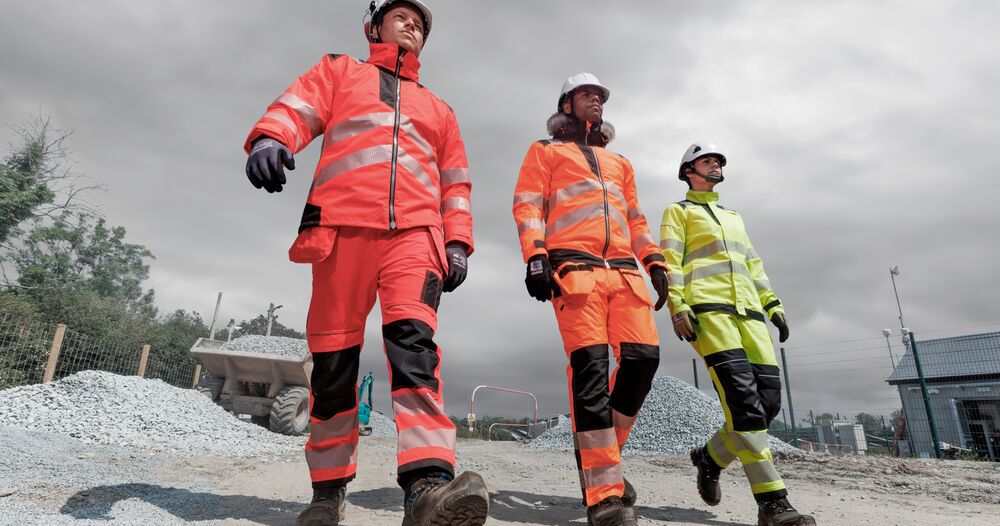
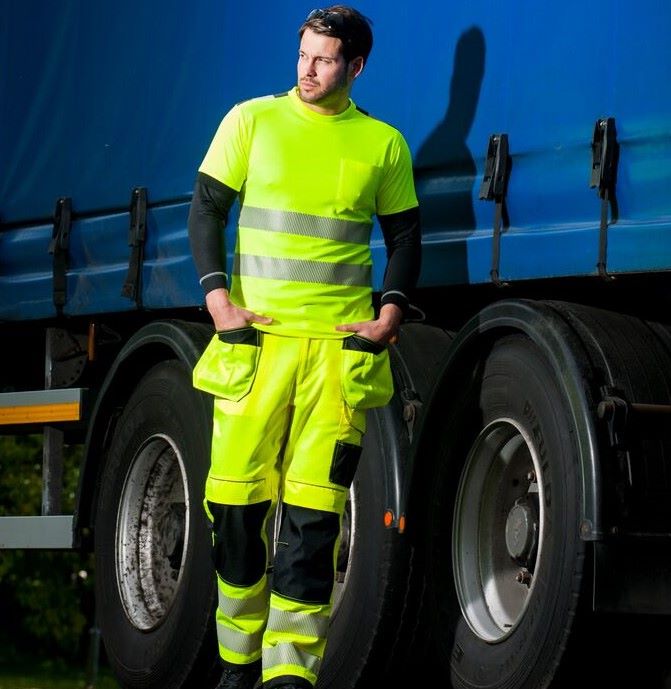
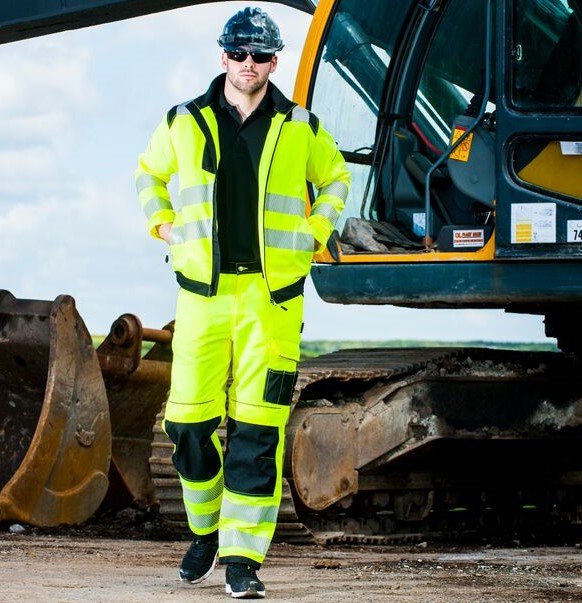
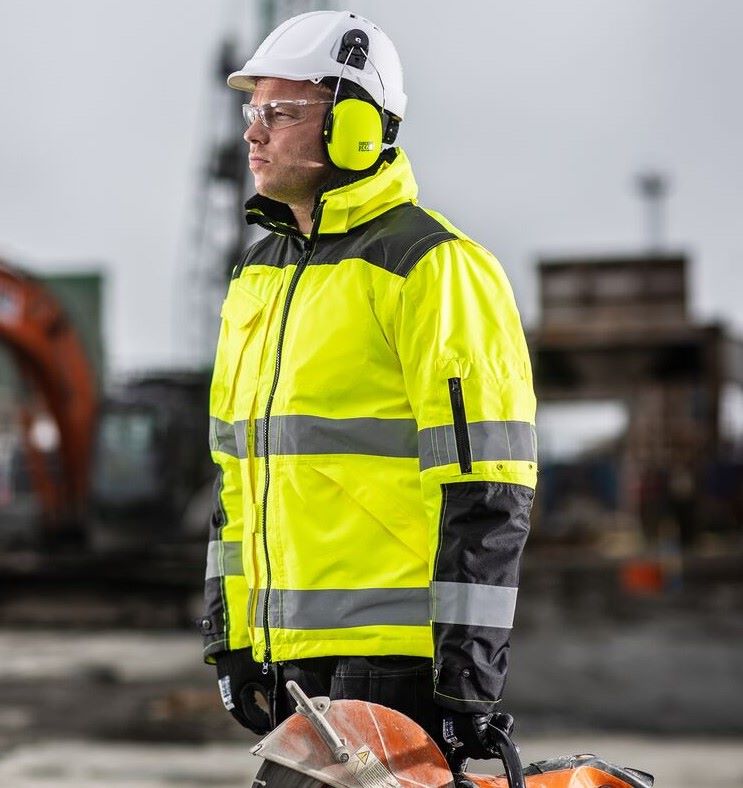
High-visibility (Hi-Vis) clothing is not just a bright uniform; it is a critical piece of Personal Protective Equipment (PPE) that dramatically reduces the risk of accidents. In any environment where workers are near moving vehicles, machinery, or potential hazards, instant and clear visibility is a matter of life and death.
Enhanced Visibility: Day or Night
The core purpose of Hi-Vis apparel is simple: to make the wearer stand out from their background. This is achieved through two key features:
- Fluorescent Material: Bright colours like yellow or orange are effective during daylight hours, as they convert UV light into visible light, appearing much brighter than standard fabric.
- Retroreflective Strips: These strips reflect light directly back to its source, such as a vehicle’s headlights. This makes the wearer highly visible at night or in low-light conditions like fog or rain, giving drivers and machinery operators crucial extra time to react.
CLICK HERE to see our range of Hi-Vi Jackets
Standards, Compliance, and the CE Mark
Specific Requirements for UK Rail Workers
Working on or near the trackside presents unique hazards. For UK rail environments, simply meeting EN ISO 20471 is not enough. Clothing must also comply with the Rail Industry Standard (RIS-3279-TOM). This standard mandates the use of fluorescent orange fabric to ensure maximum contrast against typical railway backgrounds (which often include green foliage and yellow signal lights). Rail workers must wear garments meeting at least Class 2 visibility, but full-coverage Class 3 is highly recommended for maximum safety.
We stock a comprehensive range of compliant gear for every risk level and industry. From weather-resistant Hi-Vis Jackets and full-coverage Overalls to comfortable Hoodies, Polo Shirts, and T-Shirts. We have the certified apparel your team needs to stay safe and compliant.
Shop All of our EN ISO 20471 & Rail-Spec High-Visibility Clothing – CLICK HERE!
In the UK, all professional Hi-Vis garments must meet the rigorous European standard EN ISO 20471. This standard ensures the garment has been independently tested for the effectiveness of its fluorescent background material (for daytime visibility). Retroreflective strips are also tested (for night and low-light visibility). Any compliant piece of gear will carry the vital CE Mark, confirming its legal suitability for use.
Understanding the Hi-Vis Classes
The EN ISO 20471 standard breaks visibility into three classes, based on the minimum amount of visible material required:
- Class 1 (Lowest Visibility): Suitable for low-risk environments where traffic moves slowly, such as private car parks or indoor warehouses.
- Class 2 (Intermediate Visibility): Ideal for roadside or construction work where vehicles travel below 40 mph (60 km/h). This is the minimum level required for many outdoor roles.
- Class 3 (Highest Visibility): Essential for workers on high-speed roads (motorways) or complex environments. This class requires the maximum coverage, usually incorporating long-sleeved garments to fully outline the wearer’s body.
SHOP THE FULL RANGE HERE
Shop with us today!